Popular on EntSun
- Systemores Launches Fork: Web-Native Interactive Video Engine Debuts With Thriller 'The Hollow' - 424
- Russ Lorenson Announces "What I Want For Christmas (20th Anniversary Edition)" - 408
- HSS Medical Supply Celebrates One-Year Anniversary of Its Top Performing Sales Team - 397
- Wordeee Publishes The Designer's Path by Felita Harris - 392
- Tulsa Air & Space Museum Launches "Give $16 for the F-16" Challenge to Bring Thunderbird Home for Veterans Day - 372
- Claude Zdanow named Managing Director in Miami, Florida - 358
- Geospatial Innovation Comes to Sacramento: FOSS4G NA 2026 - 340
- Captiva Cruises offers sunset voyage to Oct. 24 Swashbuckler's Ball on North Captiva - 337
- Coinfiliate Launches Platform to Helps Shoppers Earn Cashback and Creators Earn Referral Rewards - 324
- "For Love Of Will," Staged Reading at Flea Theatre, NYC, Oct 26 - 314
Similar on EntSun
- Patton AI Launches Patton Hive 4.5: Wartime Breakthroughs for Drones and Robots When GPS Goes Dark
- Hospital Direct Medical Equipment Company Seeing Growth in Used Refurbished Medical Equipment Sales
- Scoop Social Co. Brings Its Signature Mobile Dessert Experience to Nashville
- Simpalm Staffing Launches Tax Preparer Staffing for U.S. CPA Firms
- National Literacy and Workforce Readiness Crisis Sparks New Program Launching in Birmingham
- New England Consulting Partners Celebrates 25 Years of Turnaround Management Solutions
- RAS AP Consulting Releases Educational Resource to Help Organizations Prepare for IRS FIRE-to-IRIS Transition
- Former Goddard Enterprises Managing Director Anthony Ali Joins STS Capital Partners as Managing Director and Partner
- Commercial Manufacturing Validation Completed as November 10 FDA Milestone Approaches; Critical FDA Milestone Close: NRx Pharmaceuticals NAS DAQ: NRXP
- Electives Launches "Electives for Everyone," Making Live Expert-Led Learning Available to Every Employee
Space Ambitions Expanding as New Testing Builds on NASA Results and Targets MEO, GEO and Next-Generation Orbital Markets: Ascent Solar Technologies
EntSun News/11100100
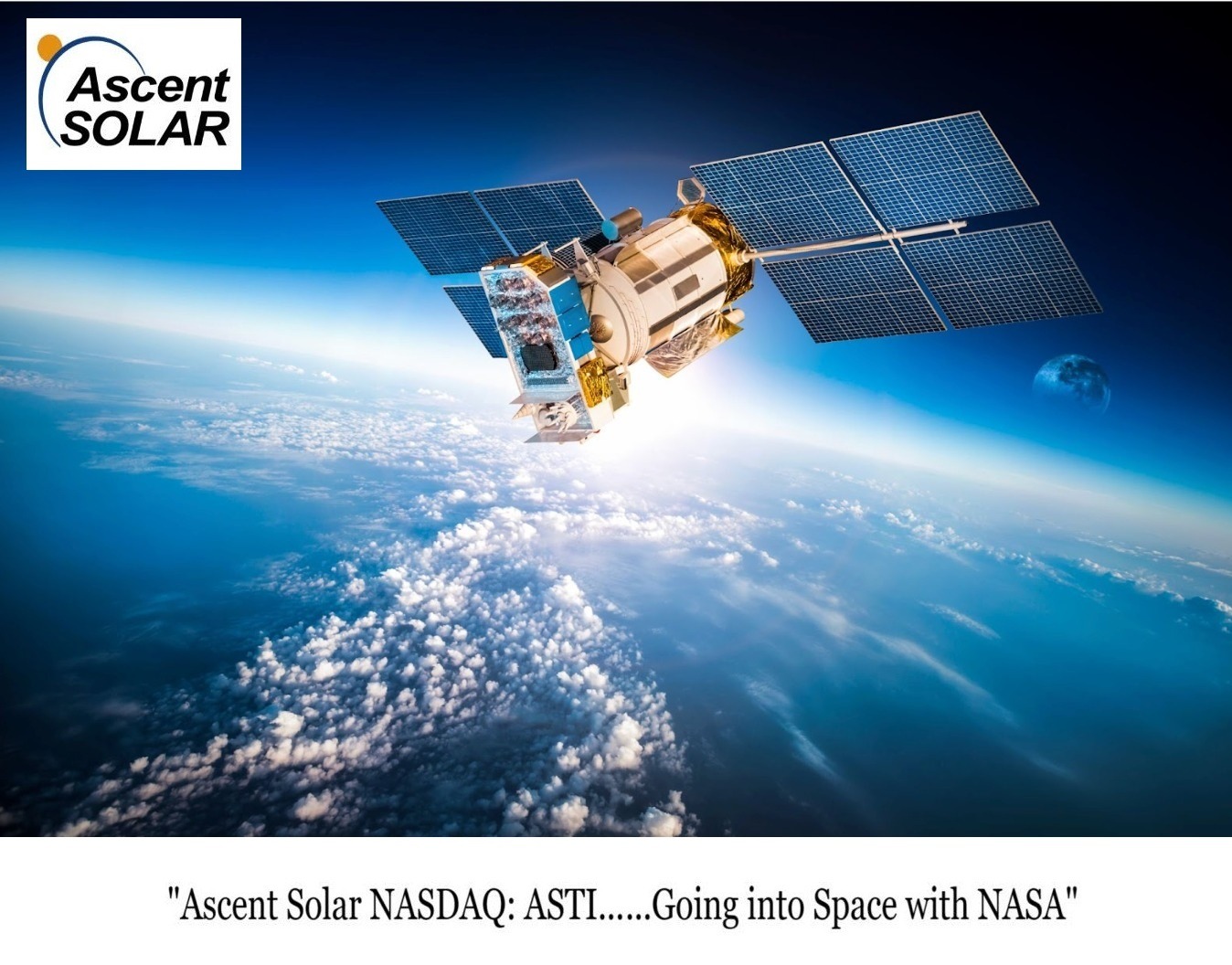
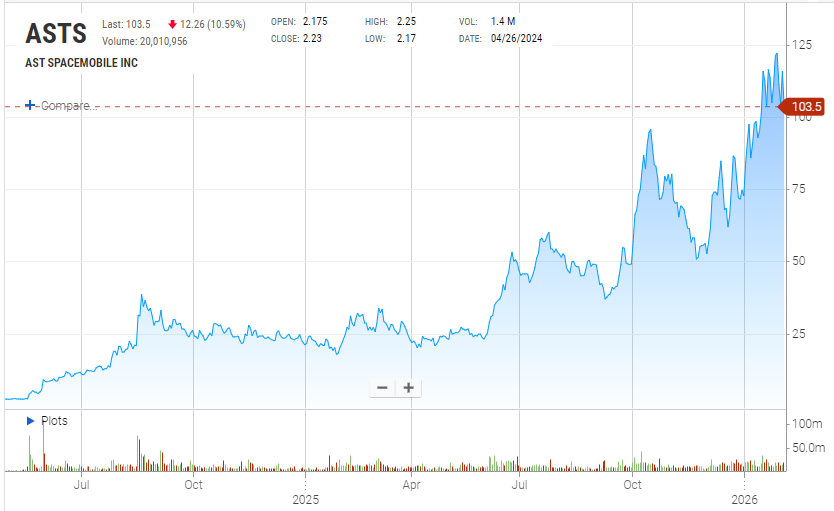
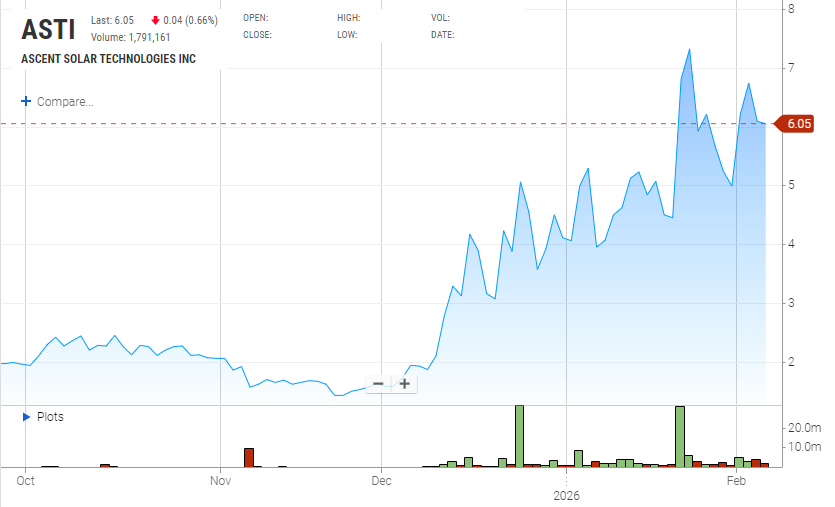
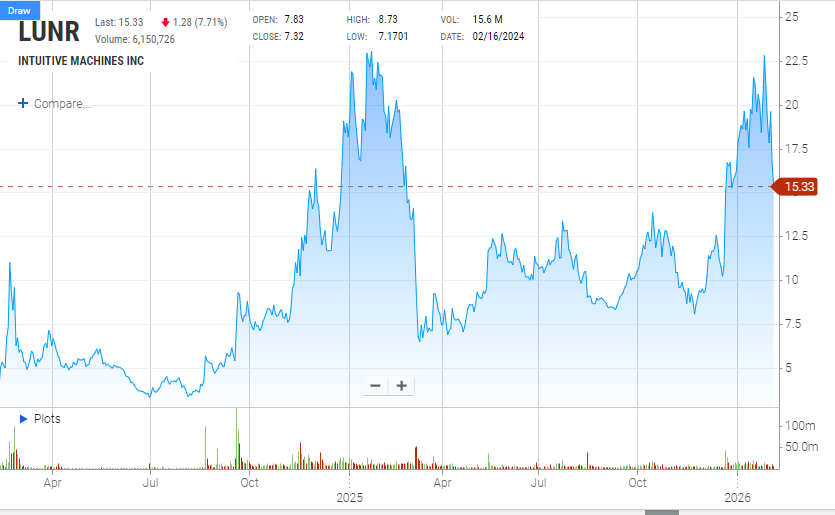

With NASA testing demonstrating potential radiation self-annealing in ASTI's CIGS technology, the Company is now expanding its validation program beyond Low Earth Orbit as demand grows for lightweight, resilient solar solutions for space-based power, orbital data centers, on-orbit servicing and other emerging markets
THORNTON, Colo. - EntSun -- The race to build the next generation of space infrastructure is accelerating, and with it comes a fundamental requirement that is sometimes overlooked: reliable, lightweight power.
Satellites, orbital data centers, space-based solar power systems, on-orbit manufacturing platforms and servicing spacecraft all require photovoltaic technologies capable of operating in increasingly demanding environments.
That is precisely where Ascent Solar Technologies, Inc. (N A S D A Q: ASTI) $ASTI is attempting to establish a differentiated position.
Today's announcement may represent another important step in that strategy.
Ascent Solar announced that it is expanding its CIGS thin-film photovoltaic testing program beyond Low Earth Orbit (LEO) after receiving increased requests for solar solutions capable of supporting missions across multiple orbital environments. The company plans in-house characterization campaigns through the remainder of 2026 to evaluate survivability and performance in increasingly challenging conditions.
For investors, the significance is not simply that ASTI is conducting another test program. The bigger story is that the company is attempting to qualify its technology for a much broader portion of the emerging space economy.
Investor Highlights
Today's News: ASTI Sets Its Sights on More Demanding Orbits
The centerpiece of today's announcement is Ascent Solar's decision to broaden its space qualification program beyond LEO.
The company is preparing in-house testing designed to determine whether its CIGS thin-film photovoltaic technology can maintain performance in Medium Earth Orbit (MEO), Geostationary Orbit (GEO) and other high-energy orbital environments.
The campaigns are expected to progressively expose the technology to increasingly demanding radiation conditions, with the program expected to conclude during the fourth quarter of 2026.
Importantly, ASTI is not starting this effort from zero.
The company says previous NASA testing in LEO demonstrated the potential for its CIGS photovoltaic technology to recover from radiation exposure through self-annealing, a phenomenon described in scholarly literature as "Remarkable Recovery."
ASTI is now extending that research to determine whether similar recovery characteristics can be observed under the significantly harsher radiation environments encountered in higher orbits.
More on EntSun News
If the results continue to be positive, the potential applications could extend well beyond conventional satellite systems.
Management specifically points toward emerging opportunities including on-orbit servicing and assembly, space-based solar power and orbital data centers.
Why Multi-Orbit Capability Could Matter
The space economy is becoming considerably more complex.
Instead of simply launching satellites into LEO, future infrastructure is expected to operate across multiple orbital regimes, each presenting different radiation, thermal and environmental challenges.
A solar technology capable of maintaining performance across those environments could potentially become increasingly valuable to spacecraft designers seeking to reduce mission risk while maximizing usable power.
That is the strategic opportunity ASTI is pursuing.
The company has approximately four decades of research and development experience and 15 years of manufacturing experience, supported by its research and development center and 5-MW nameplate production facility in Thornton, Colorado.
Recent Commercial Developments Add Another Layer
Today's announcement follows several important commercial developments during 2026.
Earlier this month, Ascent Solar highlighted accelerating demand from the unmanned systems market while reiterating that space remains its primary strategic focus.
The company said its thin-film solar technology has been integrated into Reditus Space's ENOS spacecraft, scheduled to launch this fall. ASTI also announced a new order for 100 photovoltaic modules supporting a satellite intended to manufacture components in space. Together, these opportunities could support approximately 10–25 kilowatts of recurring annual demand, according to management.
That is significant because it illustrates how ASTI's technology is moving from development and testing toward actual spacecraft applications.
Drones and HAPS Expand the Opportunity
ASTI's August 5 announcement also highlighted accelerating demand from the global drone market.
The company has received initial wing-integration orders from two Eastern European drone manufacturers, with potential recurring annual demand estimated at approximately 200–300 kilowatts as production scales.
ASTI is also pursuing additional opportunities with U.S. drone manufacturers and a European High-Altitude Platform Station (HAPS) program.
For investors, HAPS could be particularly interesting because these platforms operate at high altitude and can support communications, surveillance and other applications where lightweight and reliable power generation can be extremely valuable.
The same characteristics that make ASTI's technology attractive for spacecraft—low weight, flexibility, durability and power density—can translate into advantages for unmanned aircraft.
Unmanned Marine Systems Provide Another Growth Avenue
ASTI is also seeing demand from the autonomous marine sector.
The company has reported initial product orders from two unmanned marine vehicle companies, with potential recurring annual demand estimated at approximately 125–200 kilowatts.
This illustrates an important element of ASTI's strategy: the company can potentially leverage one core thin-film CIGS technology platform across multiple specialized markets rather than relying exclusively on one end market.
Still, management has been clear that space remains the primary focus.
June's Atomic Oxygen Results Remain a Major Technology Milestone
Today's announcement also builds upon ASTI's June 29 technology milestone involving Atomic Oxygen testing.
The company reported that its space-grade thin-film photovoltaic products experienced zero damage during a test campaign designed to represent approximately six months of exposure in Low Earth Orbit.
More on EntSun News
Atomic Oxygen is one of the most challenging environmental hazards for spacecraft operating in LEO because it can erode polymers, coatings and other materials used to protect solar arrays.
The successful testing therefore provided another piece of evidence supporting ASTI's effort to develop solar products capable of surviving harsh space environments.
NASA Remains an Important Part of the Technology Story
ASTI's relationship with NASA is particularly relevant to today's announcement.
The company previously entered a collaborative agreement with NASA's Marshall Space Flight Center and Glenn Research Center to advance thin-film photovoltaic power-beaming capabilities. That work focused on developing CIGS photovoltaic modules capable of generating power from energy-dense light beams at intensities substantially above normal sunlight.
Today's multi-orbit testing program builds upon the broader body of NASA-related research and testing that ASTI believes can help validate the unique characteristics of its CIGS technology.
For investors, NASA involvement does not guarantee commercial success, but it does provide important technical context for why ASTI's technology is being investigated for demanding space applications.
H1 Progress and Q2 Financials Put the Opportunity in Perspective
In July, ASTI reported significant first-half progress, including completion of prepaid customer orders, Atomic Oxygen testing, continued development of space power-beaming capabilities, new European business leads and additional UAV, HAPS and marine opportunities.
The company's Q2 results subsequently showed revenue of approximately $95,000, more than four times the year-earlier figure, although the company remained unprofitable.
That financial reality is important for investors.
ASTI remains an emerging technology company, and its ability to convert testing, customer orders and strategic partnerships into meaningful recurring revenue will ultimately be one of the most important factors determining its long-term success.
Investment Perspective
Today's announcement gives investors another reason to pay attention to Ascent Solar Technologies.
The company is not simply attempting to sell another conventional solar panel. It is working to establish its lightweight CIGS technology as a power platform for increasingly demanding aerospace and space applications.
The progression during 2026 is notable:
LEO testing → Atomic Oxygen resilience → NASA radiation research → multi-orbit qualification → spacecraft deployments → satellite orders → space power-beaming development → drones → HAPS → autonomous marine systems.
The potential prize is substantial if ASTI can successfully translate this technology pipeline and growing customer interest into meaningful recurring revenue.
At the same time, investors should recognize that much of the opportunity remains developmental and that the company's financial performance remains an important risk factor.
Nevertheless, today's decision to expand testing into MEO, GEO and other high-energy orbital environments, building upon encouraging NASA-related results, represents a meaningful escalation of Ascent Solar's ambitions.
With demand growing for power systems capable of supporting the next generation of orbital infrastructure, ASTI's progress through the remainder of 2026 could be closely watched by investors seeking exposure to the intersection of NASA-supported space technology, advanced photovoltaics, defense, autonomous systems and the emerging orbital economy.
For more information on $ASTI visit: https://www.ascentsolar.com https://compasslivemedia.com/asti/
Media Contact
Company Name: Ascent Solar Technologies, Inc (N A S D A Q: ASTI)
Contact Person: Paul Warley, CEO
Email: sales@ascentsolar.com
Phone: (720) 872-5000
Country: United States
Website: https://www.ascentsolar.com
DISCLAIMER: https://corporateads.com/disclaimer/
Disclosure listed on the CorporateAds website
Satellites, orbital data centers, space-based solar power systems, on-orbit manufacturing platforms and servicing spacecraft all require photovoltaic technologies capable of operating in increasingly demanding environments.
That is precisely where Ascent Solar Technologies, Inc. (N A S D A Q: ASTI) $ASTI is attempting to establish a differentiated position.
Today's announcement may represent another important step in that strategy.
Ascent Solar announced that it is expanding its CIGS thin-film photovoltaic testing program beyond Low Earth Orbit (LEO) after receiving increased requests for solar solutions capable of supporting missions across multiple orbital environments. The company plans in-house characterization campaigns through the remainder of 2026 to evaluate survivability and performance in increasingly challenging conditions.
For investors, the significance is not simply that ASTI is conducting another test program. The bigger story is that the company is attempting to qualify its technology for a much broader portion of the emerging space economy.
Investor Highlights
- Today's announcement expands ASTI's testing beyond LEO into MEO, GEO and other high-energy orbits
- New testing builds upon prior NASA results showing potential radiation recovery through self-annealing
- The expanded testing program is expected to continue through Q4 2026
- Management says customer requests for multi-orbit solar solutions are increasing
- Space remains ASTI's primary strategic market
- ASTI's solar technology is integrated into Reditus Space's ENOS spacecraft
- A separate satellite customer has ordered 100 photovoltaic modules
- August developments include new drone and HAPS opportunities with potential recurring demand
- Unmanned marine systems are emerging as another commercial application
- June Atomic Oxygen testing demonstrated zero damage in the company's test campaign
- Q2 revenue increased significantly year over year, although the company remains unprofitable
Today's News: ASTI Sets Its Sights on More Demanding Orbits
The centerpiece of today's announcement is Ascent Solar's decision to broaden its space qualification program beyond LEO.
The company is preparing in-house testing designed to determine whether its CIGS thin-film photovoltaic technology can maintain performance in Medium Earth Orbit (MEO), Geostationary Orbit (GEO) and other high-energy orbital environments.
The campaigns are expected to progressively expose the technology to increasingly demanding radiation conditions, with the program expected to conclude during the fourth quarter of 2026.
Importantly, ASTI is not starting this effort from zero.
The company says previous NASA testing in LEO demonstrated the potential for its CIGS photovoltaic technology to recover from radiation exposure through self-annealing, a phenomenon described in scholarly literature as "Remarkable Recovery."
ASTI is now extending that research to determine whether similar recovery characteristics can be observed under the significantly harsher radiation environments encountered in higher orbits.
More on EntSun News
- Attorney Jason M. Sullivan Quoted in The Telegraph on Trump's $10 Billion BBC Lawsuit
- Sycamore Dove Releases "Loving Every Moment"
- Hospital Direct Medical Equipment Company Seeing Growth in Used Refurbished Medical Equipment Sales
- Scoop Social Co. Brings Its Signature Mobile Dessert Experience to Nashville
- Comedian Don Barnhart Turns a Second Chance at Life Into Big Laughs at Delirious Comedy Club
If the results continue to be positive, the potential applications could extend well beyond conventional satellite systems.
Management specifically points toward emerging opportunities including on-orbit servicing and assembly, space-based solar power and orbital data centers.
Why Multi-Orbit Capability Could Matter
The space economy is becoming considerably more complex.
Instead of simply launching satellites into LEO, future infrastructure is expected to operate across multiple orbital regimes, each presenting different radiation, thermal and environmental challenges.
A solar technology capable of maintaining performance across those environments could potentially become increasingly valuable to spacecraft designers seeking to reduce mission risk while maximizing usable power.
That is the strategic opportunity ASTI is pursuing.
The company has approximately four decades of research and development experience and 15 years of manufacturing experience, supported by its research and development center and 5-MW nameplate production facility in Thornton, Colorado.
Recent Commercial Developments Add Another Layer
Today's announcement follows several important commercial developments during 2026.
Earlier this month, Ascent Solar highlighted accelerating demand from the unmanned systems market while reiterating that space remains its primary strategic focus.
The company said its thin-film solar technology has been integrated into Reditus Space's ENOS spacecraft, scheduled to launch this fall. ASTI also announced a new order for 100 photovoltaic modules supporting a satellite intended to manufacture components in space. Together, these opportunities could support approximately 10–25 kilowatts of recurring annual demand, according to management.
That is significant because it illustrates how ASTI's technology is moving from development and testing toward actual spacecraft applications.
Drones and HAPS Expand the Opportunity
ASTI's August 5 announcement also highlighted accelerating demand from the global drone market.
The company has received initial wing-integration orders from two Eastern European drone manufacturers, with potential recurring annual demand estimated at approximately 200–300 kilowatts as production scales.
ASTI is also pursuing additional opportunities with U.S. drone manufacturers and a European High-Altitude Platform Station (HAPS) program.
For investors, HAPS could be particularly interesting because these platforms operate at high altitude and can support communications, surveillance and other applications where lightweight and reliable power generation can be extremely valuable.
The same characteristics that make ASTI's technology attractive for spacecraft—low weight, flexibility, durability and power density—can translate into advantages for unmanned aircraft.
Unmanned Marine Systems Provide Another Growth Avenue
ASTI is also seeing demand from the autonomous marine sector.
The company has reported initial product orders from two unmanned marine vehicle companies, with potential recurring annual demand estimated at approximately 125–200 kilowatts.
This illustrates an important element of ASTI's strategy: the company can potentially leverage one core thin-film CIGS technology platform across multiple specialized markets rather than relying exclusively on one end market.
Still, management has been clear that space remains the primary focus.
June's Atomic Oxygen Results Remain a Major Technology Milestone
Today's announcement also builds upon ASTI's June 29 technology milestone involving Atomic Oxygen testing.
The company reported that its space-grade thin-film photovoltaic products experienced zero damage during a test campaign designed to represent approximately six months of exposure in Low Earth Orbit.
More on EntSun News
- The Mako Girls Announce The "MAKO TAKEOVER CONCERT" Live at Center Stage Vinyl In Atlanta
- Soft & Sweet Unveils New Studio Location and Website for All-Natural Sugaring in Las Vegas
- Beyond Popularity Rankings, The World's No.1 Superstar® Wins Best Pop Music Video for "Under Your Spell"
- Simpalm Staffing Launches Tax Preparer Staffing for U.S. CPA Firms
- Weirding Way Media Unveils New Website for Independent Podcast Network
Atomic Oxygen is one of the most challenging environmental hazards for spacecraft operating in LEO because it can erode polymers, coatings and other materials used to protect solar arrays.
The successful testing therefore provided another piece of evidence supporting ASTI's effort to develop solar products capable of surviving harsh space environments.
NASA Remains an Important Part of the Technology Story
ASTI's relationship with NASA is particularly relevant to today's announcement.
The company previously entered a collaborative agreement with NASA's Marshall Space Flight Center and Glenn Research Center to advance thin-film photovoltaic power-beaming capabilities. That work focused on developing CIGS photovoltaic modules capable of generating power from energy-dense light beams at intensities substantially above normal sunlight.
Today's multi-orbit testing program builds upon the broader body of NASA-related research and testing that ASTI believes can help validate the unique characteristics of its CIGS technology.
For investors, NASA involvement does not guarantee commercial success, but it does provide important technical context for why ASTI's technology is being investigated for demanding space applications.
H1 Progress and Q2 Financials Put the Opportunity in Perspective
In July, ASTI reported significant first-half progress, including completion of prepaid customer orders, Atomic Oxygen testing, continued development of space power-beaming capabilities, new European business leads and additional UAV, HAPS and marine opportunities.
The company's Q2 results subsequently showed revenue of approximately $95,000, more than four times the year-earlier figure, although the company remained unprofitable.
That financial reality is important for investors.
ASTI remains an emerging technology company, and its ability to convert testing, customer orders and strategic partnerships into meaningful recurring revenue will ultimately be one of the most important factors determining its long-term success.
Investment Perspective
Today's announcement gives investors another reason to pay attention to Ascent Solar Technologies.
The company is not simply attempting to sell another conventional solar panel. It is working to establish its lightweight CIGS technology as a power platform for increasingly demanding aerospace and space applications.
The progression during 2026 is notable:
LEO testing → Atomic Oxygen resilience → NASA radiation research → multi-orbit qualification → spacecraft deployments → satellite orders → space power-beaming development → drones → HAPS → autonomous marine systems.
The potential prize is substantial if ASTI can successfully translate this technology pipeline and growing customer interest into meaningful recurring revenue.
At the same time, investors should recognize that much of the opportunity remains developmental and that the company's financial performance remains an important risk factor.
Nevertheless, today's decision to expand testing into MEO, GEO and other high-energy orbital environments, building upon encouraging NASA-related results, represents a meaningful escalation of Ascent Solar's ambitions.
With demand growing for power systems capable of supporting the next generation of orbital infrastructure, ASTI's progress through the remainder of 2026 could be closely watched by investors seeking exposure to the intersection of NASA-supported space technology, advanced photovoltaics, defense, autonomous systems and the emerging orbital economy.
For more information on $ASTI visit: https://www.ascentsolar.com https://compasslivemedia.com/asti/
Media Contact
Company Name: Ascent Solar Technologies, Inc (N A S D A Q: ASTI)
Contact Person: Paul Warley, CEO
Email: sales@ascentsolar.com
Phone: (720) 872-5000
Country: United States
Website: https://www.ascentsolar.com
DISCLAIMER: https://corporateads.com/disclaimer/
Disclosure listed on the CorporateAds website
Source: CorporateAds
Filed Under: Business
0 Comments
Latest on EntSun News
- Electives Launches "Electives for Everyone," Making Live Expert-Led Learning Available to Every Employee
- Tax Tops the List as Wealthy Brits Plan Their Exit, La Vida Survey Finds
- Reflection Studio Highlights Dog-Friendly Wedding Photography in New Jersey
- "The Tree of Cinema" Installation Brought Film History and Its Audiences Together at TIFF 2026
- Detroit Lawyer Steals $600,000 Settlement Meant to Protect Child
- Hyperlens Studios Announces Planned Merger with Arclight, Ant Hill Productions, and Lemazing
- Heritage at South Brunswick Announces Special Townhome Mortgage Rate Buydown
- Heritage at Hopewell Announces Limited-Time Mortgage Rate Buydown on Select Quick Move-In Townhomes
- Air Force Veteran Sean Douglas Delivers Powerful Suicide Prevention Presentations to Hundreds of Marines at Camp Pendleton
- Former Boxer Jay Dehmalo Recalls Sparring With Muhammad Ali and Other Heavyweight Legends
- Movie&Short Festival 2027: Submissions Open for Short Films and Visual Arts
- Studio Valdivieso Builds Film and Television Slate Around the Value of a Writer's Body of Work
- Renew Integrative Health Publishes Updated Peptide Therapy Guide to Help Patients Understand Their Options
- AI Agents Are Getting Their Own Computers. HRTech Leading in Vertical Harness Development
- UK Financial Ltd Announces Two-for-One Upgrade of Maya 3 to Maya 3G Token Using Chainlink Cross-Chain Technology
- Mystery Enterprises Brings Host-Free Murder Mystery Entertainment to Halloween Gatherings
- Kim Coles to Serve as Mistress of Ceremonies at ABWP's 45th Annual Scholarship Gala
- 'Black Lightning' And 'Lace' Star Yolanda T. Ross Signs With New Manager
- Higginswerx and Mirrorize Unveil 'Mirror 9: The Hollowing'
- Critical FDA Milestone much Closer as Preservative-Free Ketamine Review Advances: NRx Pharmaceuticals (N A S D A Q: NRXP)